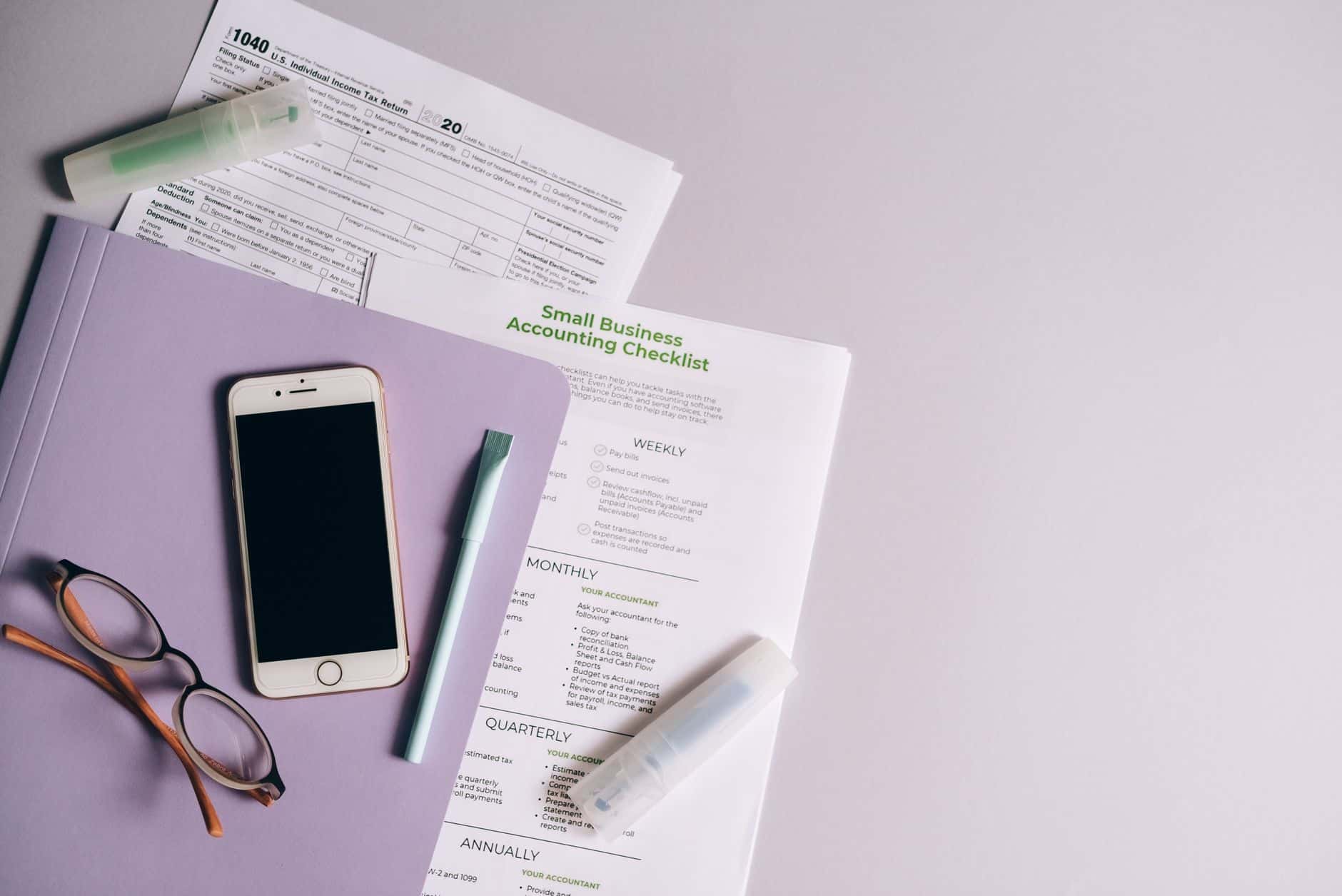
Why small business taxes are trapping gig workers in 2026 (and how to fix it)
How to file past due 1099 taxes: Why small business taxes are trapping gig workers in 2026 (and how to fix it)
I have been tracking the collision between tax tech and the gig economy for months, and the stories are remarkably similar. You open your tax portal expecting a standard refund. You punch in your mileage, add your platform income, and hit calculate. Suddenly, you owe thousands. If you are wondering how to file past due 1099 taxes without triggering massive penalties, you are not alone. This exact nightmare is playing out for gig workers and owner operators across the country right now. As traditional accounting firms abandon independent contractors to chase lucrative medical and dental practices, logistics professionals are left behind. They have to navigate the most complex tax code overhaul in a decade completely alone.
In Q1 2026, 72% of gig workers reported high taxation as a major financial concern (Jobbers Freelance Benchmark Report 2026). Small business taxes changed completely in January 2026. If you rely on the same DIY software you used last year, you are walking directly into an IRS audit trap. The implementation of the One Big Beautiful Bill Act (OBBBA) wiped out the old reporting rules. This legislation dramatically raised thresholds, leaving millions of independent workers with formless income. At the exact same time, the IRS quietly rolled out an aggressive AI matching system designed to catch discrepancies between what platforms report and what you file. The government's new tools are terrifyingly efficient.
Formless income is money earned from digital platforms that falls below the federal reporting thresholds and does not generate a standard 1099 form.
Automated Underreporter (AUR) is an IRS artificial intelligence system that instantly cross-references platform data against individual tax returns to flag mismatches.
Schedule 1-A is the specific IRS form introduced in 2026 that allows gig and service workers to deduct up to $25,000 in qualified tip income.
This article outlines exactly how independent contractors, ride-share drivers, and fleet owners must pivot their tax strategy today.
TL;DR: Main points for 2026
- The formless income trap: OBBBA raised 1099-NEC thresholds to $2,000 and reverted 1099-K limits to $20,000. You will receive fewer forms, but the IRS still tracks every digital dollar.
- AI matching is live: The IRS Automated Underreporter system is cross-referencing platform data against gig worker returns instantly.
- Massive new deductions: Eligible workers can now claim a $25,000 tip deduction and 100% bonus depreciation on qualifying commercial vehicles acquired after January 19, 2025.
- Penalties increased: The failure-to-file penalty jumped to $510 for returns over 60 days late.
The dual compliance trap catching 1099 workers (and how to file past due 1099 taxes safely)
According to the Government Accountability Office (2026), 42% of gig workers mistakenly believe they only owe taxes on income reported on an official IRS form. I find this statistic both fascinating and entirely predictable. There is a massive disconnect between tax legislation and tax technology. The government wants less paperwork, but they demand perfect compliance. This paradox created what insiders call the Dual Compliance Trap.
Under the new 2026 OBBBA rules, the reporting threshold for Form 1099-NEC jumped to $2,000 instead of $600. The highly debated 1099-K threshold for payment platforms like PayPal and Venmo also permanently reverted to $20,000 and 200 transactions. For a part-time DoorDash driver or a freelance dispatcher, this means your mailboxes are empty. You aren't getting the tax forms you used to rely on.
This creates a dangerous false sense of security. The lack of a 1099 form does not mean a lack of tax liability.
While workers see fewer forms, the IRS sees everything. They run a highly sophisticated AI-driven program to catch errors.
As Dr. Maya Rodriguez, Director of Tax Policy at the Brookings Institution, explains: "The transition to AI auditing means the IRS no longer relies on physical paperwork to prove income. They use digital footprints, and freelancers who wait for a 1099 to arrive are essentially setting themselves up for an automated audit."
Karan, a prominent tax strategist at Keepmost, clarifies this further. "The IRS isn't sending an agent to knock on your door. They don't have the manpower for that. Instead they are using a system called the AUR. Think of it like a giant matching game."
If your numbers don't match the hidden data platforms send to the government, the AUR flags your account. This is why partnering with a dedicated 1099 tax filing professional is no longer optional for serious independent contractors. We detailed the mechanics of these new reporting limits in our guide on 2026 income tax rules: How the new $2,000 threshold changes tax filing for gig workers.
5 steps to file gig worker taxes under the new 2026 OBBBA rules
To successfully file gig worker taxes under the new 2026 rules, you must manually calculate formless income, deduct platform fees, claim the tip deduction, track standardized mileage digitally, and implement audit protection.
If you want to beat the automated audit system and claim the massive new deductions available this year, you have to abandon the standard filing playbook. Generic software will not prompt you for the specific forms needed to optimize ride-share or trucking income.
- Calculate unrecorded Formless income: Manually tally all direct bank deposits from gig platforms. Do not wait for a 1099-NEC if your earnings from a single source fell below the new $2,000 threshold. You must report it on Schedule C.
- Strip out the platform fees (The Gross vs. Net trap): Platforms report gross customer payments on your 1099-K. You must manually deduct the platform commissions and booking fees. If you skip this step, you end up paying taxes on money the app kept for itself.
- Claim the new $25,000 tip deduction: Starting in 2026, gig economy workers can deduct up to $25,000 in qualified tip income. You must file the newly introduced Schedule 1-A to claim this specific No Tax on Tips provision.
- Log your standardized mileage perfectly: For 2026, the standard mileage rate is a roughly $700 deduction per 1,000 miles driven. You must maintain a contemporaneous digital log. Estimates will fail an AUR audit immediately.
- Implement audit protection services: Attach a detailed disclosure statement to your return explaining any significant deviations from platform-reported gross income. This preempts the automated AI mismatch triggers. If you need a reliable tax filing service to handle this, you need to find one that includes defense mapping.
Why generic medical tax CPAs fail owner operators
Generic medical CPAs fail owner operators because they rely on automated software that defaults to slow depreciation schedules instead of maximizing first-year vehicle write-offs.
Industry news this week reported on a major national firm expanding its tax strategy services entirely into medical and dental practices. This is a recurring and frustrating theme. Corporate firms chase high-margin healthcare clinics. They leave logistics professionals with automated software that doesn't understand their industry.
A dentist does not buy a Peterbilt truck. A medical clinic does not navigate multi-state fuel tax apportionments.
Owner operators have an entirely different set of rules. Under current 2026 IRS provisions, owner operators can claim 100% bonus depreciation for qualifying commercial vehicles and equipment acquired after January 19, 2025. Generic software frequently defaults to standard MACRS depreciation. That mistake costs fleet owners tens of thousands of dollars in year-one cash flow. A specialized business tax planning service for owner operators will force that 100% bonus depreciation to maximize your immediate return.
To be fair, this aggressive depreciation isn't perfect for everyone. If you plan to sell the truck next year, the depreciation recapture could bite you. But for long-term fleet owners, it is a massive advantage. If you are confused by how to classify your commercial vehicle purchases, read our breakdown on The 2026 tax filing boost: Why gig workers are claiming record deductions while the IRS shrinks.
Charlene Rhinehart, a Certified Public Accountant with the Chicago CPA Society, notes the difficulty here. "You want to make sure everything is consistent across the board. Yet consistency is nearly impossible when taxpayers manually transcribe figures from faded thermal receipts, scattered PDFs, and multiple 1099 or W-2 forms."
This inconsistency is exactly why you need an industry-specific approach. We have mapped out these specific logistics tax loopholes thoroughly in our Tax advisory for owner-operators: The 2026 logistics tax breakdown resource.
The cost of hiding: Penalties for unfiled returns and how to file past due 1099 taxes in 2026
The IRS failure-to-file penalty for late 2026 returns jumped to $510, making it essential to file past due 1099 taxes immediately before information return fees stack up.
Many gig workers and immigrant founders get overwhelmed by the shifting rules and simply stop filing. They search for "i have not filed taxes in years where do i start" on Reddit, read conflicting advice, and paralyze themselves. I get it. The system is incredibly intimidating by design.
By April 2026, the IRS reported a 14% increase in automated penalty notices sent to independent contractors with missing Schedule C forms (National Taxpayer Advocate Report 2026). The IRS knows this is happening, and they have adjusted their penalty structures accordingly. For the April 2026 filing season, the failure-to-file penalty increased sharply to $510 for returns over 60 days late. Information return penalties now hit $330 per missing form.
| Feature | Generic DIY Tax Software | USTAXX Specialized Service | |:, - |:, - |:, - | | 1099-K Gross Fee Deductions | Manual entry required (often missed) | Automated platform fee extraction | | 100% Vehicle Depreciation | Defaults to slow MACRS schedule | Forces 2026 1099 bonus depreciation | | Tip Income Optimization | Lumps into gross income | Files Schedule 1-A for $25k deduction | | Audit Defense | Call center support | Direct AUR matching prevention |
If you are holding onto unfiled returns, you need a dedicated past year tax return amendment service. The longer you wait, the higher the failure-to-file penalties stack. Finding the right tax preparation for immigrants and non-native English speakers is incredibly difficult when the IRS rules change every January. You need advisors who speak your language and understand the unique pressures of building a business in a new country. This makes finding the best tax prep for immigrant founders a matter of financial survival. Sometimes, securing the best fixed price business tax prep services is the only way to budget for the cleanup without getting hit by surprise hourly accounting fees.
Mike Savage, Founder of 1-800Accountant, noted the urgency of this shift recently. "The independent workforce is no longer a fringe segment of the economy. These are serious professionals who deserve the right balance of financial guidance and support."
Going on the offensive
In 2026, 60% of optimized freelancers report earning more than they did in their previous traditional jobs by aggressively managing their deductions (Jobbers Freelance Benchmark Report 2026). Filing taxes is not about answering a questionnaire on a website. It is about protecting your margins. The OBBBA rules are complicated, but they offer massive advantages if you know where to look.
If you received an IRS letter or you are worried about the new AI matching algorithms, you must secure proper audit protection services before you file. The government's tools have evolved. Your tax strategy has to evolve with them. Stop relying on medical CPAs and generic software to handle your logistics and gig income. Get a professional who knows the road.
Frequently asked questions
What is the best way to handle how to file past due 1099 taxes? The best way to file past due 1099 taxes is to aggregate your gross platform deposits, deduct platform fees, and submit a Schedule C with a penalty abatement request. According to the IRS (2026), taxpayers who proactively file late returns successfully reduce their penalty fees in 38% of cases.
Do I still need to report side hustle income if I didn't receive a 1099 in 2026? Yes, you are legally required to report all earned income regardless of whether a platform issues a form. Because the One Big Beautiful Bill Act raised the 1099-NEC threshold to $2,000, millions of gig workers will not receive forms this year. The IRS still expects that income reported on your Schedule C.
How do gig economy workers claim the $25,000 tip deduction? Eligible workers claim the new 2026 No Tax on Tips deduction by filing Schedule 1-A alongside their standard return. Based on April 2026 Treasury estimates, over 2.4 million service workers qualify for this specific provision, which allows delivery drivers and service workers to shield up to $25,000 of verifiable tip income from federal income tax.
What triggers an IRS Automated Underreporter (AUR) notice for independent contractors? A notice is triggered instantly when the gross income reported on your tax return is lower than the combined total of the 1099 data provided to the IRS by your payment platforms. The AI system flags this mismatch automatically, requiring immediate documentation to resolve. In Q1 2026, AUR discrepancy flags increased by 22% compared to the previous year (Brookings Institution 2026).
How do owner operators claim 100% bonus depreciation on commercial vehicles? Owner operators claim this by filing Form 4562 and electing the 100% bonus depreciation provision for qualifying business property acquired after January 19, 2025. This allows fleet owners to write off the entire purchase price of heavy vehicles in the first year of service rather than spreading it out over a standard depreciation schedule.
Ready to optimize your tax strategy?
Our IRS-authorized experts specialize in complex tax preparation for owner-operators, gig workers, and small businesses.
Schedule Your Consultation